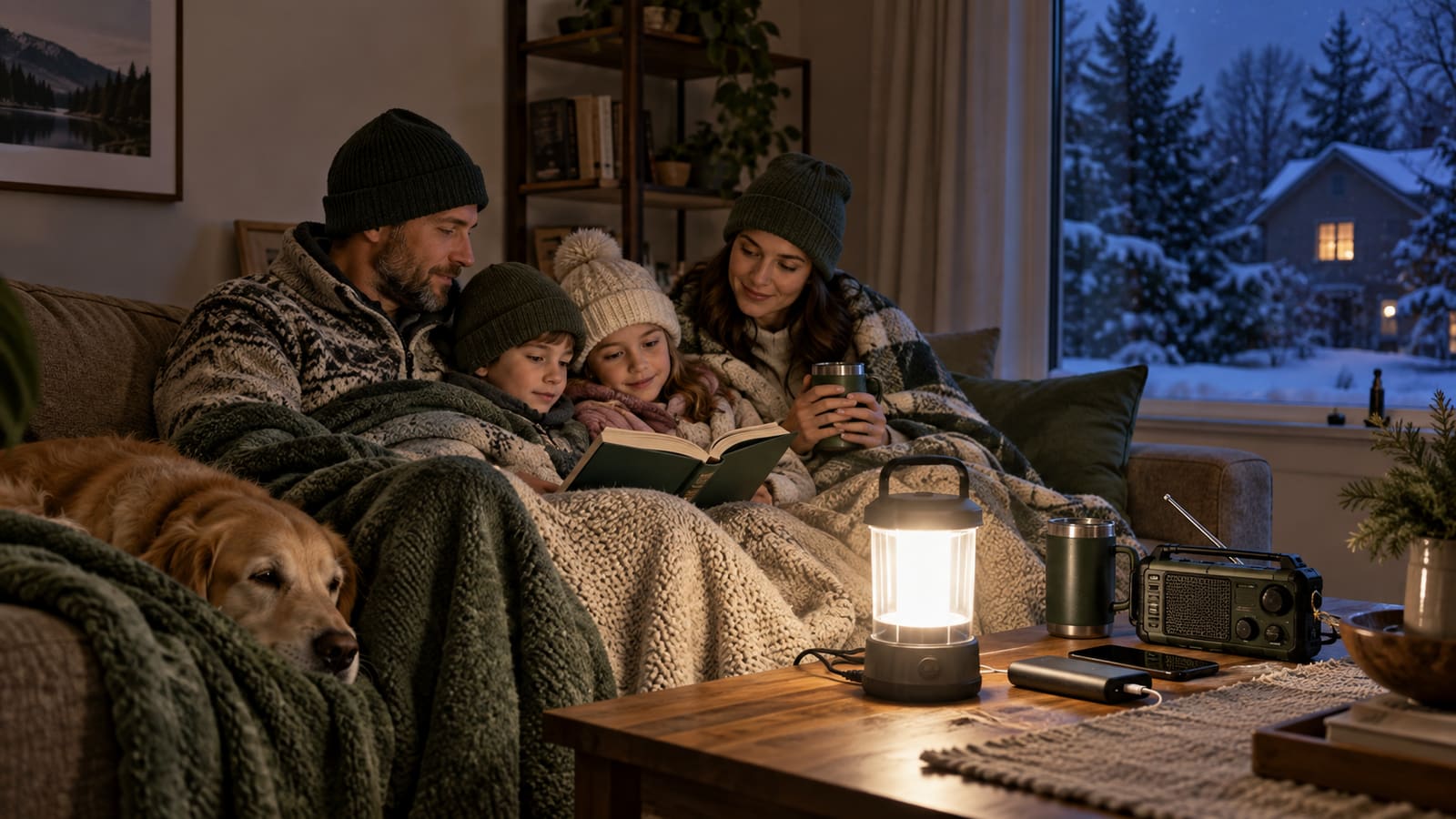
A winter power outage creates a different kind of preparedness problem. The lights are inconvenient. Losing heat can become dangerous. If your home relies on electricity for heating — or electricity is required to operate parts of the heating system — an outage can turn comfortable indoor temperatures into a serious cold-weather problem.
The goal is not to heat the entire house at any cost. The goal is to conserve the heat you have, keep people warm and avoid creating a second emergency with unsafe heating methods.
Dress for the House You Have, Not the House You Want
If indoor temperatures begin falling, don't wait until you're extremely cold to add layers. Wear loose layers of warm clothing. Keep clothing dry. Add warm socks and appropriate head covering. Use blankets or sleeping bags.
National Weather Service winter guidance recommends layers of loose-fitting, lightweight, warm clothing and removing layers if necessary to avoid sweating and subsequent chilling. Think of your clothing as part of the heating system. Your goal is to keep body heat close to the body rather than trying to heat thousands of cubic feet of indoor air.
Concentrate Activity in a Smaller Area
If your heat is out, conserving warmth becomes easier when you aren't trying to keep every room equally comfortable. Close off unused rooms where doing so is safe. Close curtains or blinds at night to reduce heat loss through windows. Use towels or similar materials at obvious drafts under doors where appropriate.
National Weather Service cold-weather guidance recommends closing unused rooms, reducing drafts and covering windows when normal heat is unavailable. Choose a room that can accommodate household members comfortably and safely. But never block vents required by operating fuel-burning appliances.
Safe Warmth Checklist
Use Blankets Strategically
A blanket doesn't create heat. It slows heat loss. That's exactly what you need. Use blankets over people rather than trying to make every cold surface in the home warm. Sleeping bags designed for cold temperatures may also be useful. If household members are sleeping in one safe area, body heat and insulation may make that space more manageable than separate bedrooms.
Eat and Drink
Your body needs energy to produce heat. Maintain normal nutrition and hydration. National Weather Service guidance recommends continuing to eat and drink non-alcoholic fluids during cold emergencies. Alcohol is not a reliable warming strategy. And dehydration can still occur in cold weather.
The Most Dangerous Mistake: Improvised Indoor Heating
A cold house creates strong pressure to "find some heat." This is where power outages become dangerous. CDC warns against using generators, charcoal grills, portable gas camping stoves and similar combustion equipment indoors because they can produce carbon monoxide, a colorless and odorless gas that can cause sudden illness or death.
Do not use a gas oven to heat the house. Do not bring a charcoal grill inside. Do not put a portable generator in the garage and assume an open door makes it safe. CDC's 2026 guidance says portable generators should be operated outside and more than 20 feet from windows, doors and vents. Have working carbon-monoxide alarms with battery backup.
Safe vs. Unsafe Heat Sources
Safe
- Layered clothing
- Blankets & sleeping bags
- Battery-powered lighting
Unsafe Indoors
- Generators & grills
- Gas camping stoves
- Gas ovens for heat
Know When the House Is No Longer the Right Shelter
Preparedness sometimes means staying. Sometimes it means leaving. CDC advises seeking a safer shelter with friends, family or a community facility when indoor conditions become dangerously hot or cold. This is particularly important for infants, older adults, people with medical conditions and anyone whose health makes temperature extremes more dangerous. Your winter outage plan should therefore include a destination. Where could you go if staying home becomes unsafe? That question should be answered before the outage.
Protect Your Backup Power
If you're using battery-based power, decide what deserves electricity: communication, medical equipment, lighting, and perhaps limited heating equipment only if the battery system is properly rated and the runtime makes sense. Portable electric heaters consume significant power — a small power station that can charge a phone many times may run a heater for a surprisingly short period. Know the power requirements before depending on equipment.
Light Safely
Battery-powered lights are preferable to turning a blackout into a fire risk. CDC notes that candles can cause house fires and should never be left unattended. Rechargeable lanterns and headlamps are easier to use and don't add indoor combustion.
Prepare Before Winter
A useful winter-blackout setup might include reliable lanterns, flashlights, charged power banks, an emergency radio, warm blankets, sleeping bags appropriate to your conditions, warm clothing, stored water, easy-to-prepare food and a destination plan if temperatures become unsafe.
Then test those supplies before cold weather arrives. Can you find everything in the dark? Are batteries charged? Does the radio work? Do you know where your warmest room is? Does everybody know the relocation plan?
Watch for Cold-Related Illness
Cold becomes more than discomfort when a person begins developing signs of hypothermia. National Weather Service guidance lists signs including shivering, exhaustion, confusion, fumbling hands, memory loss, slurred speech and drowsiness. Treat a suspected cold-related medical emergency seriously and seek professional medical assistance.
The Bottom Line
During a cold-weather outage, think in this order: conserve heat, insulate people, maintain food and water, avoid carbon monoxide, monitor conditions, relocate if the home becomes unsafe.
The dangerous question is "how can I create heat at any cost?" The better question is "how can I keep everyone safely warm?"