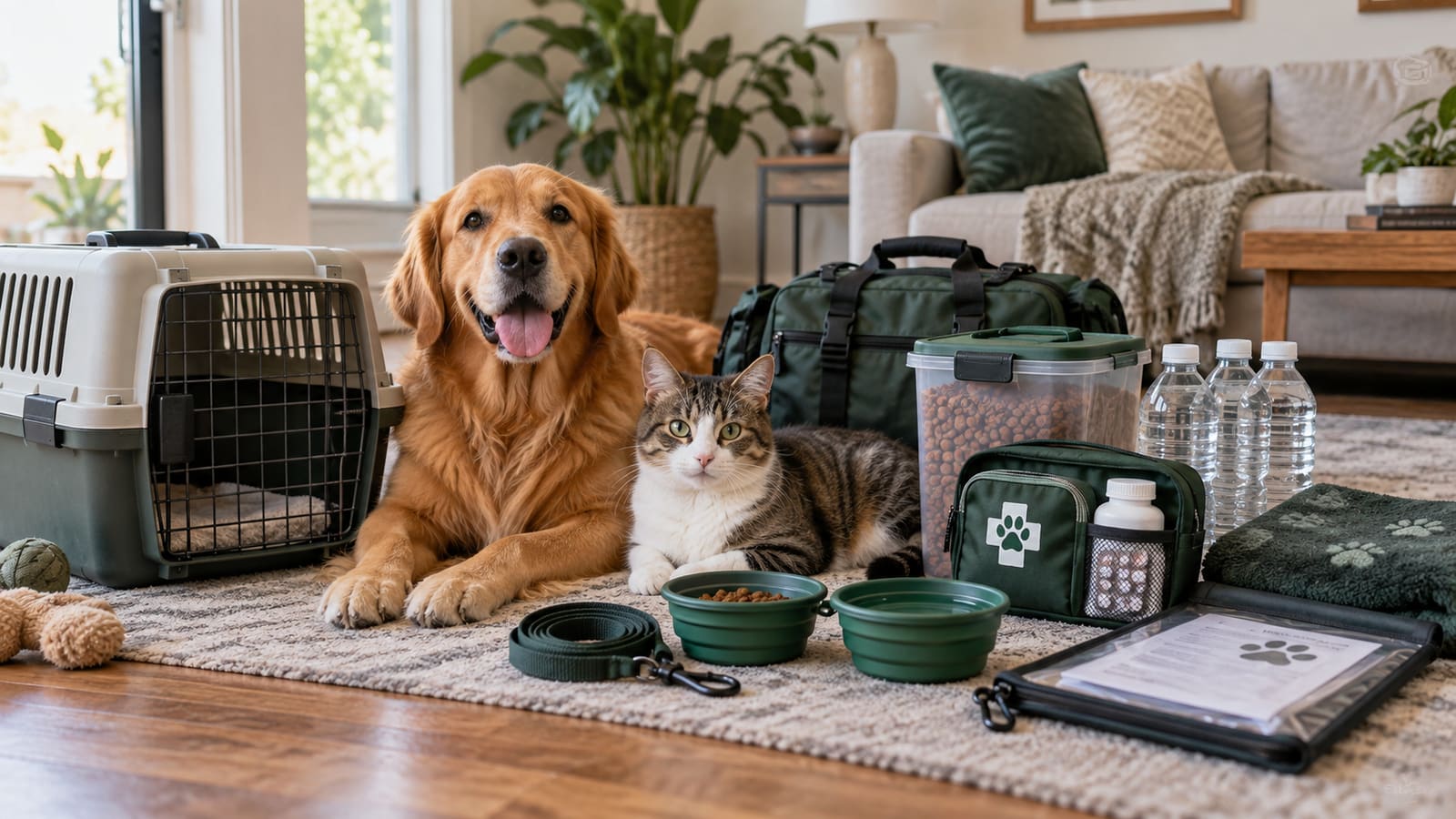
If your emergency plan stops with the people in your household, it isn't finished. Pets need food, water, medication, transportation, identification, and a safe place to go. And unlike an adult household member, your dog or cat cannot read an evacuation warning and pack a bag. Their preparedness depends entirely on you.
CDC advises pet owners to make a plan and build an emergency kit before a disaster occurs. Here's what that should look like.
Start With Identification
Make sure pets wear appropriate identification with current contact information. If your pet is microchipped, make sure the chip is registered and that your contact details with the registry are current. CDC identifies current identification and microchipping as important steps for reuniting owners with pets after an emergency. Keep recent photographs too — ideally, photographs showing you with your pet as well as clear images of the animal.
Keep a Carrier or Leash Ready
If you have to evacuate quickly, you don't want to discover that the cat carrier is behind six boxes in the attic. Keep appropriate leashes, harnesses and carriers accessible. CDC recommends storing a leash or carrier near an exit and practicing transporting pets before an emergency. A frightened animal may behave differently from normal. Practice helps.
Build a Pet Emergency Kit
Your pet should have dedicated supplies. CDC's pet disaster-kit guidance currently recommends food, water, medication, medical and vaccination records, identification information, carrier supplies and sanitation items. It goes further than many household checklists by recommending a two-week supply of food and water for each animal, where practical. The exact reserve will depend on the animal and your household situation.
Pet Kit Essentials
Food
Store food your pet already eats. A disaster is not the ideal time to make an unnecessary abrupt diet change. Protect food from moisture and pests. Rotate it regularly. If the food is canned, include a manual opener if required. Include feeding instructions if another person may need to care for the animal.
Water
Pet water belongs in your household water calculation. Don't plan one gallon per human and then forget the dog. CDC recommends including a dedicated water supply in the pet disaster kit. Talk with your veterinarian if you need help estimating the appropriate amount for a particular animal.
Medication
If your pet takes prescription medication, include it in your emergency planning. Keep written instructions. Know dosing. Keep veterinarian contact information. CDC recommends including medication records and, where possible, an emergency medication supply. Don't wait until evacuation day to discover that refills aren't available.
Veterinary Records
Maintain accessible copies of important records: vaccinations, medical history, prescription information, proof of ownership or adoption, microchip details, and veterinarian contact information. Keep copies in a protected, preferably waterproof container or secure digital backup. CDC's pet kit guidance specifically recommends these documents.
5 Questions to Answer
Know Where You Can Go
This is one of the most important parts of pet preparedness. Not every emergency shelter accepts household pets. CDC notes that many evacuation centers, including some Red Cross facilities, do not accept pets other than service animals. So identify alternatives before you need them: pet-friendly lodging, friends or relatives outside the affected area, veterinary hospitals, boarding facilities, and animal shelters or local relief organizations. Make more than one plan.
Build a Buddy System
What happens if an evacuation occurs while you're at work? Choose a trusted neighbor, friend or nearby relative who can access and evacuate the pet if necessary. Make sure that person knows where carriers, leashes and supplies are stored. CDC recommends establishing this type of buddy system before an emergency.
Practice
Pets can become frightened when routines change. Practice putting cats into carriers. Practice loading dogs safely into the vehicle. Take short trips if appropriate. Teach household members where pet supplies are located. CDC specifically recommends practicing household evacuation with pets. An animal that is comfortable with its carrier is easier to move during a stressful evacuation.
Plan for Sanitation
Include bags and cleaning supplies for dogs. Include litter and an appropriate portable litter setup for cats. Pack paper towels, waste bags and other practical cleanup supplies. Good sanitation becomes even more important in temporary housing or crowded evacuation settings. CDC notes that close quarters can increase hygiene and disease concerns for animals and people.
Keep Pets Controlled After a Disaster
Familiar environments can change dramatically after storms, floods and fires. Fences may be down. Landmarks may be altered. Strange animals may be nearby. CDC warns that pets can become confused or lost after disasters and recommends using carriers or leashes. Don't assume a normally reliable pet will behave normally in abnormal conditions.
What About Shelter-in-Place?
If authorities direct you to remain home, bring pets inside. Choose an appropriate pet-safe area. Remove toxic substances and plants. Close off small spaces where a frightened pet could become trapped. CDC includes specific pet considerations in shelter-in-place planning. Keep pet food, water, medicines and sanitation supplies accessible.
A Practical Pet Preparedness System
Your pet plan should answer five questions: where is the pet's kit? How will we transport the animal? Where can we stay? Who gets the pet if we aren't home? Where are the animal's records and medicines? If you can answer those questions quickly, you're far more prepared than someone with a random box of pet supplies and no evacuation plan.
The Bottom Line
Pets aren't an add-on to the family emergency plan. They are part of it. Prepare their food and water. Keep identification current. Maintain accessible carriers and leashes. Plan medication and records. Identify evacuation destinations. And practice — because an emergency is stressful enough without trying to invent your pet plan while you're leaving.