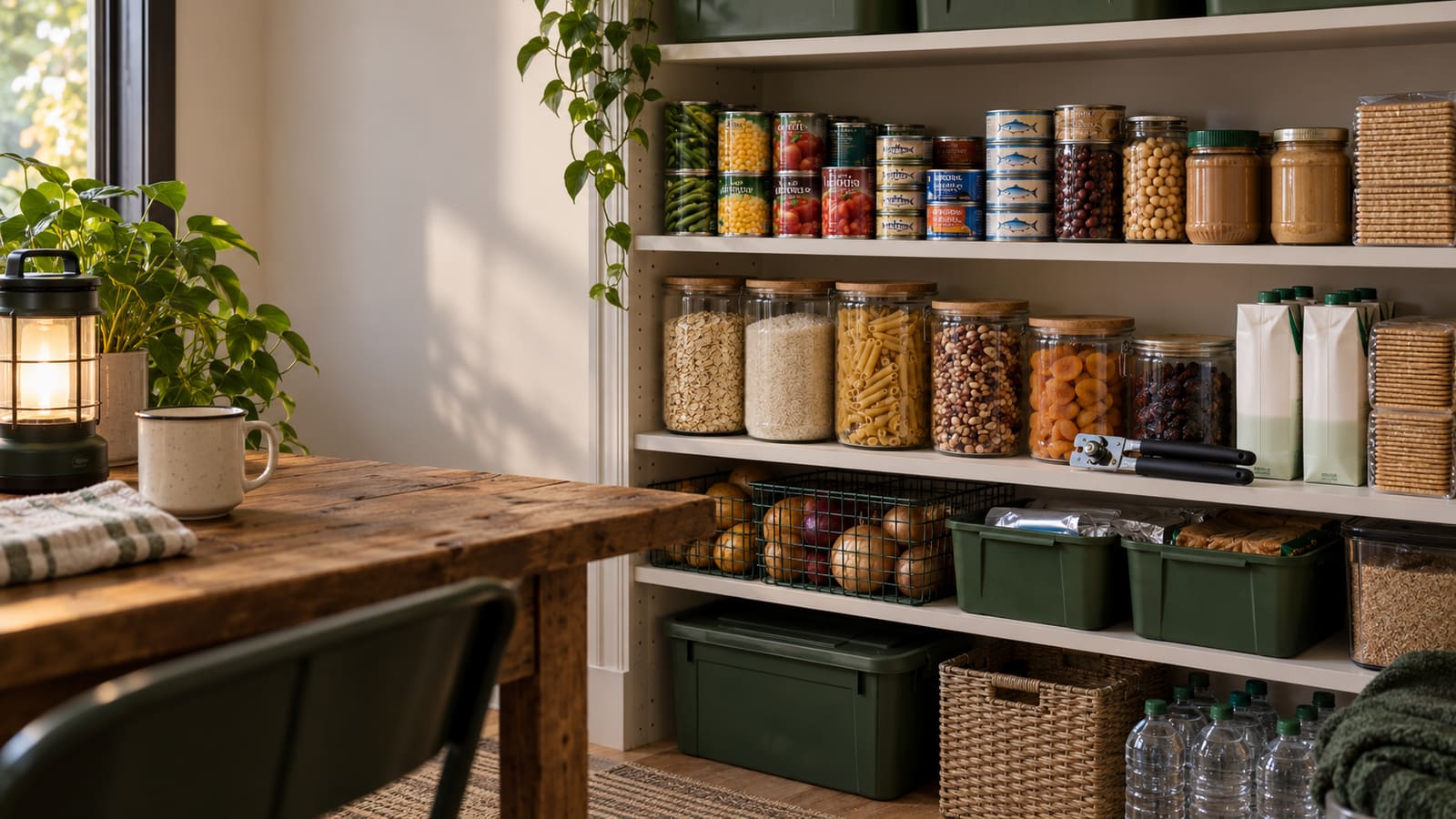
Emergency food has become a product category of its own. Buckets. Freeze-dried meals. Thirty-year shelf-life packages. Survival bars. Some of those products can be useful. But none of them changes the first rule of emergency food planning: store food your household can realistically eat and prepare.
You do not have to buy a specialized emergency-food system to become better prepared. FoodSafety.gov specifically notes that it is not necessary to buy dehydrated or specialized emergency food. Start with the pantry.
Your First Goal: Three Days
For a portable go-kit, three days is a practical initial target. FoodSafety.gov recommends keeping at least a three-day supply available for disasters and disruptions. Your initial objective is therefore straightforward: could everyone in the household eat for three days if you couldn't immediately shop and normal cooking or refrigeration were limited? If not, begin there.
Your Next Goal: A Stay-at-Home Reserve
Current 2026 Red Cross guidance distinguishes between portable supplies and a larger home reserve. It recommends at least three days of supplies in a go-kit and two weeks of food and water in a stay-at-home kit. Don't feel obligated to build two weeks overnight. Build progressively: three days, then one week, then two weeks where practical.
What Makes Good Emergency Food?
The best emergency foods tend to have several traits: they store well, they require little or no refrigeration, they require little water or cooking, they match dietary needs, and people actually want to eat them. FoodSafety.gov recommends foods with a long storage life that need little or no cooking, water or refrigeration and that meet the needs of infants, people with special diets and pets. That definition includes plenty of ordinary grocery-store foods.
Start With What You Already Eat
Look inside your pantry. What shelf-stable foods are already part of your normal routine? Canned beans, canned meats or fish, soups, nut butters, crackers, oats, rice, pasta, shelf-stable milk, fruit, ready-to-eat meals. The exact list depends on your household.
The advantage of storing familiar food is rotation. You eat it. You replace it. The emergency reserve doesn't sit forgotten until everything expires simultaneously.
Good Emergency Food Traits
Consider Cooking Requirements
Rice may store well. But it requires water, fuel and cooking. That doesn't make rice bad emergency food. It means you should understand the whole system. If every meal in your emergency pantry requires twenty minutes of boiling, your food plan also depends heavily on water and fuel. Balance longer-cooking staples with foods that can be eaten cold or prepared quickly.
Keep a Manual Can Opener
This advice is almost comically simple. It also matters. If your food reserve contains canned goods that require an opener, keep a manual can opener with the emergency supplies. Both government and Red Cross emergency-supply guidance include one for good reason.
Don't Forget Dietary Needs
Emergency food shouldn't force someone to ignore an allergy, medical diet or other essential restriction. Include food for infants. Include food for pets. Consider texture or feeding requirements for household members who may need them. A generic survival-food box cannot know the people in your home. You can.
Watch the Salt
Very salty foods can increase thirst. FoodSafety.gov specifically suggests avoiding an emergency supply dominated by highly salty or spicy foods when water may be limited. You don't need a salt-free pantry. Just remember that food and water planning are connected.
Build Progressively
Store Food Where Floodwater Can't Reach It
If flooding is a realistic risk, don't put the entire emergency pantry directly on a basement floor. USDA guidance recommends placing emergency food where contaminated floodwater is less likely to reach it. Location matters.
Rotate Instead of Hoarding
Use a first in, first out approach. Older products get eaten first. Newer products go behind them. Check best-by and expiration information. Inspect packaging. Replace damaged items. Update the inventory when household needs change. Emergency food should be part of your normal food-management system — not a forgotten archaeological layer at the back of a closet.
What About Refrigerated Food?
Your normal refrigerator is not your emergency pantry. During a power outage, USDA says an unopened refrigerator can generally keep food safely cold for about four hours, while a full freezer can maintain temperature for around 48 hours and a half-full freezer for around 24 hours. After that, safety depends on temperature and the specific food. Never taste questionable food to decide whether it's safe. This is why shelf-stable emergency food matters.
A Practical Build Method
Don't make one giant emergency-food shopping trip. Each normal grocery trip, add a few shelf-stable items your household uses. When they enter the pantry, rotate older stock forward. Over time, three days becomes a week. A week becomes two. That approach reduces expense and waste. Current Red Cross guidance similarly recommends building kits gradually when budget is a concern.
The Bottom Line
Your emergency-food strategy doesn't need to look impressive. It needs to work. Start with three days. Build toward a larger home reserve. Choose foods requiring minimal refrigeration and preparation. Store what people will eat. Account for children, diets and pets. Rotate it. And remember that food is only one part of the system — you also need water and a realistic way to prepare anything requiring cooking.