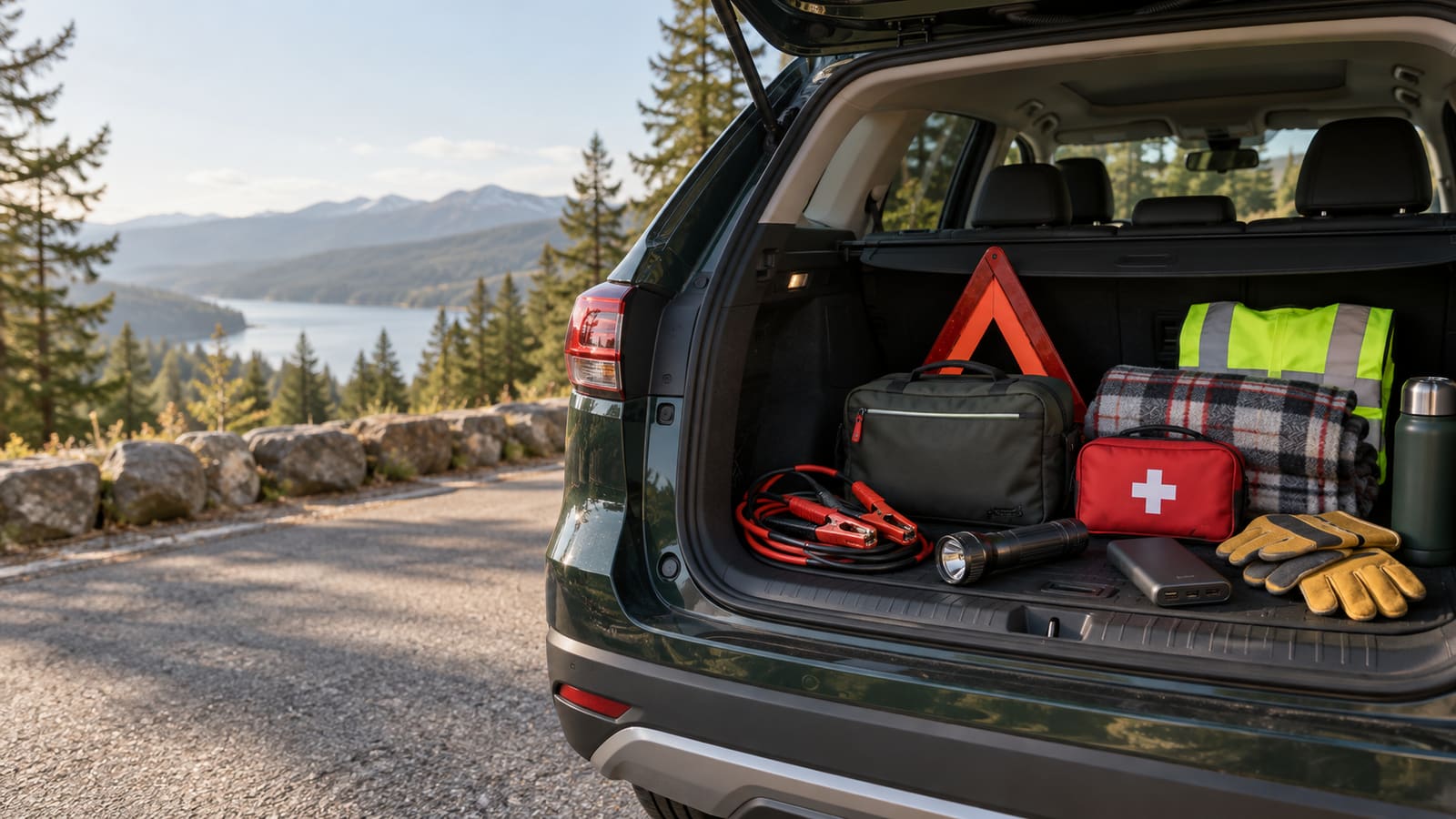
There's an obvious flaw in keeping all of your emergency supplies at home. Sometimes you're not home. A breakdown, severe-weather event, road closure or unexpected delay can leave you miles from the equipment sitting safely in a closet.
That's why your vehicle deserves its own preparedness system. Not a miniature version of everything you own. A kit built around the problems that happen on the road.
Start With Roadside Visibility
If you have to stop near traffic, being visible matters. A reflective safety vest and warning triangles or other appropriate road-warning equipment can make you easier for other drivers to see. Use equipment in accordance with local road rules and position yourself as safely as circumstances allow. Your first job is preventing one problem from becoming another accident.
Keep a Vehicle First-Aid Kit
The American Red Cross recommends keeping first-aid supplies in both the home and vehicle. A car kit should be accessible rather than buried beneath luggage. Check it periodically for damaged or expired components. And remember that equipment is more valuable when someone knows how to use it — first-aid and CPR training are worthwhile preparedness skills.
Carry Reliable Lighting
Keep a flashlight or headlamp in the vehicle. If you're changing a tire, inspecting a problem or signaling after dark, both hands may be needed. A headlamp is often especially practical. Check batteries periodically and don't let the car light become the flashlight you've forgotten about for four years.
In the Trunk
Add Phone Power
A charged power bank and vehicle charging cable can keep your phone available for navigation, roadside assistance and emergency communication. Store the right cable — if several household members use different connectors, account for that. Keep the power bank charged. High summer heat can be hard on batteries, so follow the manufacturer's storage guidance for lithium battery products and inspect them for damage.
Prepare for Temperature
A car can become an uncomfortable — or dangerous — place in extreme weather. Keep blankets or other appropriate warmth supplies during cold seasons. CDC specifically advises drivers in winter to carry extra warm clothing and blankets and not assume the vehicle will always be able to provide heat. In hot climates, water and a plan for safely reaching climate-controlled shelter may matter more than extra insulation. Adjust the kit by season.
Food and Water
Keep a modest supply of shelf-stable food and drinking water appropriate to your environment and storage conditions. Rotate it. Vehicle temperatures can become extreme, so check the storage guidance for anything left in the car long-term. A collapsible empty water container can also be useful without taking much space.
Twice-a-Year Vehicle Check
Basic Roadside Equipment
The exact tools depend on your vehicle and your skills. Useful items may include jumper cables or an appropriate jump pack, a tire inflator, tire-pressure gauge, work gloves, basic tools and equipment needed to safely use the vehicle's spare tire if it has one. Don't carry equipment you have no idea how to operate and assume the problem is solved. Practice before you need it.
Include Information
Keep roadside-assistance information and important emergency contacts available offline. If your insurance policy includes towing or roadside assistance, know the number. You may also want a paper map relevant to your regular travel area. A dead phone shouldn't erase every option.
Your Winter Add-On
Cold-weather vehicle preparedness deserves extra attention. Depending on your climate, add an ice scraper, snow brush, warm hat and gloves, heavier blanket, traction aid and small shovel. National Weather Service guidance emphasizes carrying a winter survival kit and staying with the vehicle if stranded in severe winter weather unless a safe shelter is very close.
If You Become Stranded in Snow
Your vehicle can be easier for rescuers to find and may provide meaningful shelter from severe weather. CDC winter guidance recommends staying with the vehicle in many stranded winter situations, wrapping up in warm clothing and blankets, and using visible signals for rescuers. If the engine is run for heat, carbon-monoxide safety becomes critical. CDC advises making sure snow is not blocking the exhaust pipe and slightly opening a window while periodically running the engine. Never ignore possible carbon-monoxide symptoms.
Keep the Exhaust Clear
A blocked tailpipe can allow carbon monoxide to build inside the vehicle. CDC specifically warns drivers to clear snow from the tailpipe before operating the vehicle after a storm. This isn't a minor detail. Carbon monoxide cannot be seen or smelled.
Build Around Your Actual Driving
Someone commuting ten miles through a major city needs a different setup from someone regularly driving rural mountain highways. Ask: where do I drive? What weather do I encounter? How long could help realistically take? Who usually travels with me? Do I transport children, pets? Does anyone have medical needs? Your kit should reflect those answers.
A Vehicle Kit Should Be Maintained
Set a recurring reminder twice a year. Check the first-aid supplies. Charge the power bank. Test the lights. Inspect food and water. Update clothing for the season. Check roadside equipment. Confirm contact information. Preparedness equipment deteriorates when ignored.
The Bottom Line
Your vehicle emergency kit should help you solve a few practical problems: be seen, communicate, handle minor roadside issues, manage common injuries, stay warm or protected, have some food and water, and wait safely for help. That's much more valuable than filling the trunk with random survival gear.